







How Insights Teams Can Lead Category Strategy — Lessons from Carlsberg Poland
Most research functions are configured to answer questions, not to set the agenda. The business identifies a problem, raises a request, and the insights team delivers. The work is rigorous. The influence is limited.
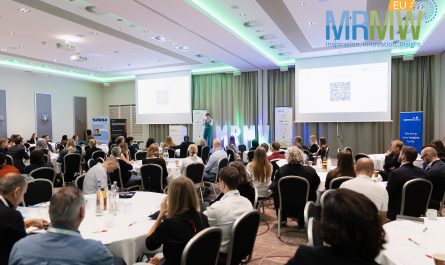
At MRMW Europe, Stanisław Dzieduszycki, Director of Research, Innovation and Strategy at Carlsberg Poland, made the case that this configuration is the wrong one — and that category strategy is the specific ground where insight teams should be claiming a larger role. The Carlsberg Poland market record over the past decade offers a reasonable basis for taking that argument seriously.
1. The brief that insight teams keep losing

The strategic opportunity has been quantified clearly enough. McKinsey’s granularity of growth analysis found that category growth accounts for 43% of revenue expansion across large global companies — nearly double the contribution of market share gains. For most organizations, category is the biggest lever available. It is also the lever that the insight functions are least formally involved in pulling.
Most insight teams hold more category knowledge than any other function in the building. The problem is not capability — it is mandate. Functions are configured to respond: a business unit identifies a question, submits a brief, and the team delivers an answer. The strategy is made upstream by people with less complete information.
The Ehrenberg Centre research sharpens the alternative: only 4% of brands across 18 FMCG categories managed to grow market share by at least one point per year and sustain it over five years. Competing harder for share within a static or declining category is, for most brands most of the time, a losing strategy. The more productive question is whether the category itself can be grown — and that is a question insight teams are well placed to answer, if they are positioned to ask it.
2. Category growth is not a single motion
The practical framework Carlsberg Poland operates on distinguishes three distinct growth zones: within existing segments, in adjacent segments, and outside the category entirely. Running all three in parallel is what allows a portfolio to keep finding growth even as individual segments mature or decline.
The larger case illustrates the within-segment opportunity. The overall category in Poland was declining — a fact that, read at the aggregate level, would suggest retreat. Segmented more carefully, the picture was different. Regional beers and a provenance micro-segment were accelerating. Consumers were not leaving lager; they were leaving standard lager for something better. Carlsberg’s response was Žatecký Světlý Ležák, positioned on Czech hop heritage, which became the only new brand to enter the Polish top ten lagers since 2015. The growth was found inside a declining segment by reading the data at the right level of granularity.
The adjacent segment move came in alcohol-free, flavored beer, where an accelerating cultural shift toward lighter drinking justified an aggressive multi-SKU portfolio response rather than a cautious test. The result was segment growth stimulated and a leadership position secured. The outside-category case is the most instructive. As the flavored beer segment began losing share to rapidly expanding RTDs, a wider lens identified a structural shift in how consumers were choosing between categories on high-energy occasions. The Garage brand had the permission to stretch into higher-ABV territory, bridging flavored beer and RTDs. Garage 8% delivered 40% brand growth — the largest value share launch in Poland in 2025.
3. The team configuration required
The shift from research delivery to category strategy ownership is not a methodology question. It is a question of who is in the team and what they are expected to do. A function staffed entirely with analytical experts will produce rigorous, accurate work. What it will not reliably produce is the strategic judgment to know which category question matters most, or the commercial fluency to translate a data signal into a portfolio decision.
The distinction worth drawing is between analysts who own the evidence and strategic thinkers who co-create decisions with the business. Both are necessary. A team without strategic thinkers produces excellent research that other people use to make decisions that the insight function could have led. The practical implication is that hiring needs to weigh strategic and commercial orientation more explicitly — not at the expense of analytical depth, but alongside it. A proactive function arrives at the commercial conversation already holding a point of view on where the category is going. That is a different job description than most insight functions currently operate against.
4. Scope is the decision that precedes everything else
Capability development and technology investment have a role in building more effective insight functions. But they produce marginal returns if the formal scope remains confined to research delivery. The more fundamental question is what the insight team is formally responsible for — and whether category strategy, portfolio strategy, and innovation pipeline are on that list or belong to someone else.
Carlsberg Poland’s value share gain of +3.7 percentage points over the decade to 2025 was the strongest performance among all major brewers in the Polish market, against losses of 4.0 points for Heineken and 3.3 for SABMiller/Asahi. That gap reflects a series of category calls — when to defend, when to expand, when to stretch — made earlier and more accurately than the competition managed. That is what category strategy ownership, properly mandated, is capable of producing.