




From trusted AI and relevant evidence to research that shapes decisions: what attendees, speakers and partners shared after two days in Berlin.
What stays with a conference community after the presentations finish and everyone heads home?
At MRMW Europe 2026, held in Berlin on 21–22 October, market research and insights professionals explored how their work is changing: AI is accelerating access to information, organisations are rethinking how research contributes to business decisions, and increasingly complex markets are making context harder to ignore.
The conversations did not stop when the event ended. In the days that followed, speakers, attendees and partners shared their own reflections on LinkedIn. Some focused on practical research challenges; others emphasised the connections and exchange of perspectives that made the two days valuable.
This review draws on a curated selection of those public, first-hand posts and comments. It is not a survey of all delegates or a claim that everyone took away the same message. Instead, the themes below connect several of the perspectives shared after Berlin.
Trusted AI needs more than fast answers
One of the strongest threads in the post-event discussion was the distinction between generating an answer and being able to rely on it.
In its recap of the REWE Group session, sponsor Market Logic Software described a practical challenge for retail intelligence: AI can make information easier to retrieve, but that does not automatically make the resulting answer sound. The company pointed to source quality, transparency, governance and human judgement as essential parts of a trustworthy system.
The session brought together Dr. Katia Passari and Marc Röhder of REWE Group with Olaf Lenzmann of Market Logic Software. Their discussion offered a useful distinction between the technology that delivers an answer and the research expertise needed to understand its limits and business context.
Stravito, reflecting separately on conversations with visitors to its stand, identified similar tensions in its sponsor post-event recap: the relationship between speed and depth, the importance of source trust, and the continued role of people in interpreting AI-supported findings.
These are perspectives shared by participating organisations, rather than evidence of a single conference-wide consensus. They nevertheless pose a useful question for insights functions: when it becomes easier to produce an answer, what makes that answer credible enough to use?
For a closer look at this challenge, read Merlien’s four-stage roadmap to building an active intelligence system, which examines how knowledge infrastructure supports trusted, accessible research.
Beyond the deck: getting research into decisions
Another theme was the move from producing insights towards influencing the places where business decisions are actually made.
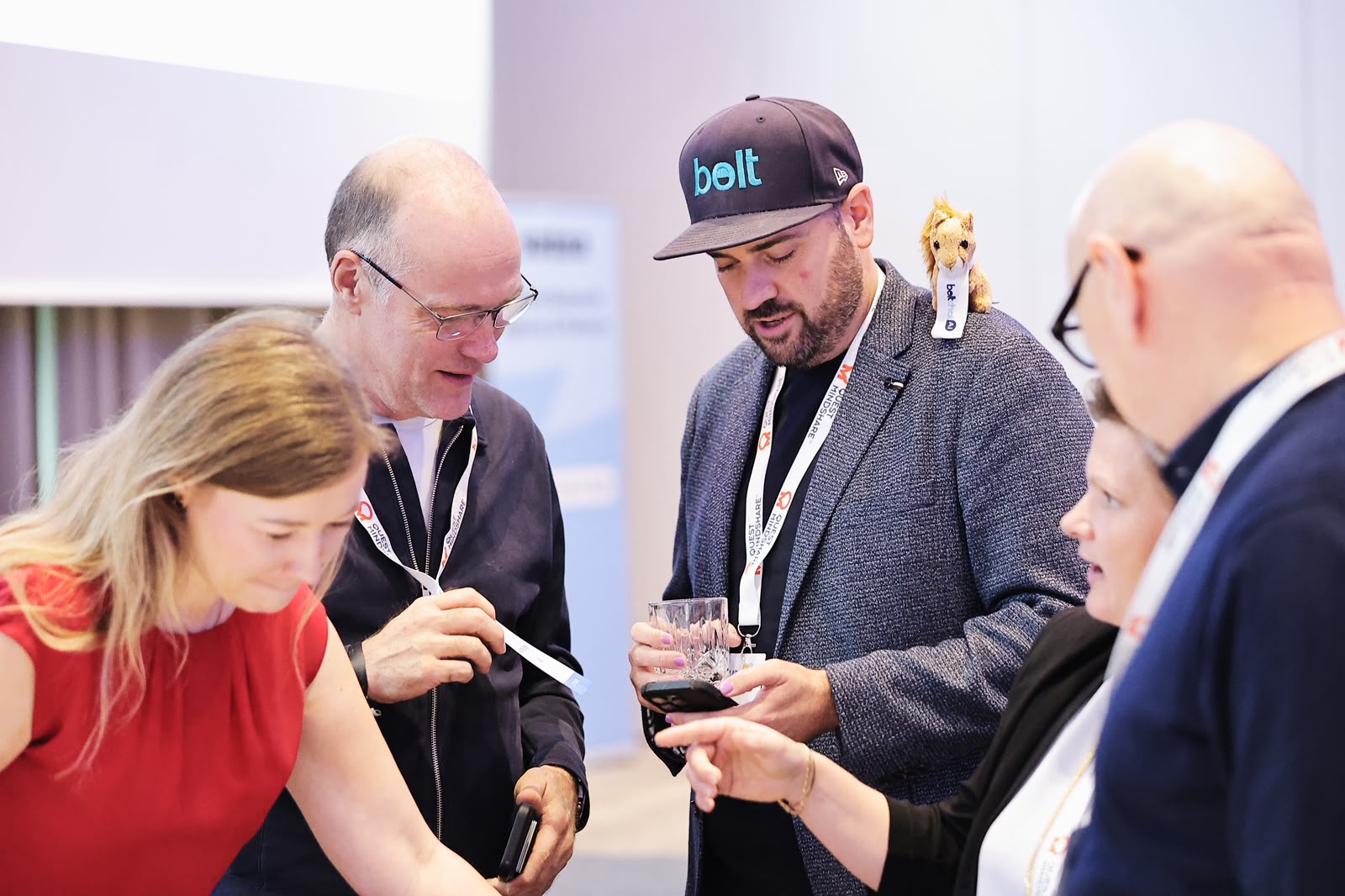
Guido Turdera of adidas facilitated the roundtable Beyond the Deck: Insights That Drive Decisions. In his post-event reflection, he described how valuable it was to exchange perspectives with researchers from different industries who were facing comparable challenges around AI, visibility and influence.
The focus was not simply on creating better presentations. It was on bringing research into the conversations where priorities are set and decisions are taken. Guido observed that similar questions about influence arise across sectors, even when their organisations and working environments look very different.
That question of influence also appeared in Viki Ølgod Frandsen’s interactive workshop on becoming a more proactive business adviser. Attendee Agnes Sofie Vatnhamar, Experience Strategist at Maersk, responded to the session on LinkedIn: “Loved this session, Viki Ølgod Frandsen – really inspiring!” Her comment reflects her experience of that workshop, where the discussion moved from research delivery towards a more proactive role in business decisions.
This also connects to Ammar Basit of Haleon, who explained in his own MRMW speaker recap how marketing mix modelling, pricing, brand health and other analytics can contribute to everyday planning and investment decisions. The task is not to build a measurement system for its own sake, but to make it useful to the business over time.
Appinio’s conference recap offered a related, sponsor-led view of this challenge through Louise Leitsch’s presentation on moving beyond isolated research studies towards a more connected insights architecture.
The approaches differ, but they point towards a shared strategic question: how does evidence travel from the research function into the decisions it was intended to inform?
Merlien explored a complementary example before the conference in its article on how eBay makes consumer insights more memorable and actionable.
Relevance matters more than the volume of data
Speed and business impact were not the only considerations. Several reflections also raised the problem of interpreting evidence across different markets, behaviours and possible futures.
One of the most detailed attendee posts came from Simone Bozzetti, who attended with Product Hub by MMR. In his own summary of three sessions, he connected Stefania Accardo’s perspective at De’Longhi Group on local relevance, Bao Do’s discussion at Nestlé Nespresso of cross-cultural research equivalence, and a closing panel on economic and geopolitical uncertainty.
Simone’s interpretation was that a consistent research process does not automatically produce equally meaningful findings in every context. An apparently identical answer can carry different implications across cultures; a global insight may need local interpretation; and a forecast may become less useful when underlying economic assumptions change.
“The common thread for me: relevance matters more than volume, whether that’s local context, cultural meaning or future scenarios.”
His reflection connects perspectives from different sessions into a practical question for researchers: how can methods, cultural understanding and scenario planning produce evidence that is relevant to the decisions people need to make?
The topic can be explored further in Merlien’s interviews with Stefania Accardo on globally connected, locally relevant insights and Oxford Economics on scenario planning under uncertainty.
What changes when customer research becomes a habit?
A further question running through the event was what it takes to move customer understanding beyond isolated projects.
Kevin Griffin, Head of UX and Design at Zepz, joined Eva Starosolsky of Listen Labs on stage to discuss the role of customer research in everyday design work. Their session looked at how research can become part of an ongoing way of working, rather than a one-off checkpoint.
In her post-event reflection, Eva highlighted how Kevin and his team had brought research into everyday work across WorldRemit and Sendwave, alongside their collaboration with Listen Labs. She summarised the principle in a concise line:
“The teams that get the most from research are the ones that make it a habit.”
Kevin’s own reflection also emphasised customer-driven decisions and the practical work involved in embedding research into design.
The distinction matters. A study may offer a strong answer to a specific question, but a research practice has a different ambition: helping people repeatedly use customer understanding as part of their normal decisions.
Related challenges also appeared in Iva Kralj-Taylor’s perspective on evolving content-discovery research at Warner Bros. Discovery, where complex audience journeys demand methodologies that can capture more than a single touchpoint.
Why the conversations between sessions mattered
Not every post-event reflection was about methods, systems or AI. Several participants singled out the opportunity to meet people facing different versions of the same professional challenges.
Dr. Katia Passari of REWE Group gave one of the clearest responses in her public comment about MRMW:
“Conferences are easy to organize. Meaningful conversations are not.”
Katia went on to describe the value of bringing together insights, research, technology and business professionals in the same place. Guido’s roundtable reflection offered another example of that cross-industry exchange.
Attendee Jennifer Price described that wider value in her post-event reflection: “I learned so much, made so many new connections, and have so many ideas for how to move forward in the Insights industry!” Her words capture the importance of what happens between sessions, when new contacts and conversations turn into ideas for future work.
Networking also extended beyond the formal agenda. Appinio invited professionals to an informal team dinner during the conference, while The Research Club organised a separate Berlin Debrief mixer supported by Merlien and other partners. These were distinct partner-led activities, rather than conference sessions or independent attendee testimonials, but they illustrate how the wider community made space to connect.
What carries forward from Berlin
Taken together, these reflections do not amount to one universal conclusion about the future of market research. They reveal a set of connected challenges that professionals approached from different roles and industries.
Some asked how to trust AI-supported evidence. Others focused on research influence, local meaning, continuous customer understanding or the opportunity to learn from peers. Across these accounts, the underlying concern is not simply how much research can be produced. It is how research becomes relevant, credible and useful where it matters.
There was appreciation for the event itself, too. Iva Kralj-Taylor of Warner Bros. Discovery praised the quality of the sessions and discussions, while Martina Bozadzhieva of Oxford Economics called it a thought-provoking experience. These are their own speaker reflections, and they give an additional perspective on what the two days meant to the people taking part.
MRMW Europe 2026 has finished, but its most useful outcomes continue in the questions, conversations and professional relationships that participants take back into their organisations.
Explore more from MRMW Europe 2026
Revisit the conference through the official MRMW Europe 2026 photo gallery, featuring moments from both days in Berlin.
Thank you to the speakers, attendees, sponsors and partners who contributed to MRMW Europe 2026, both in Berlin and through the discussions that followed.