





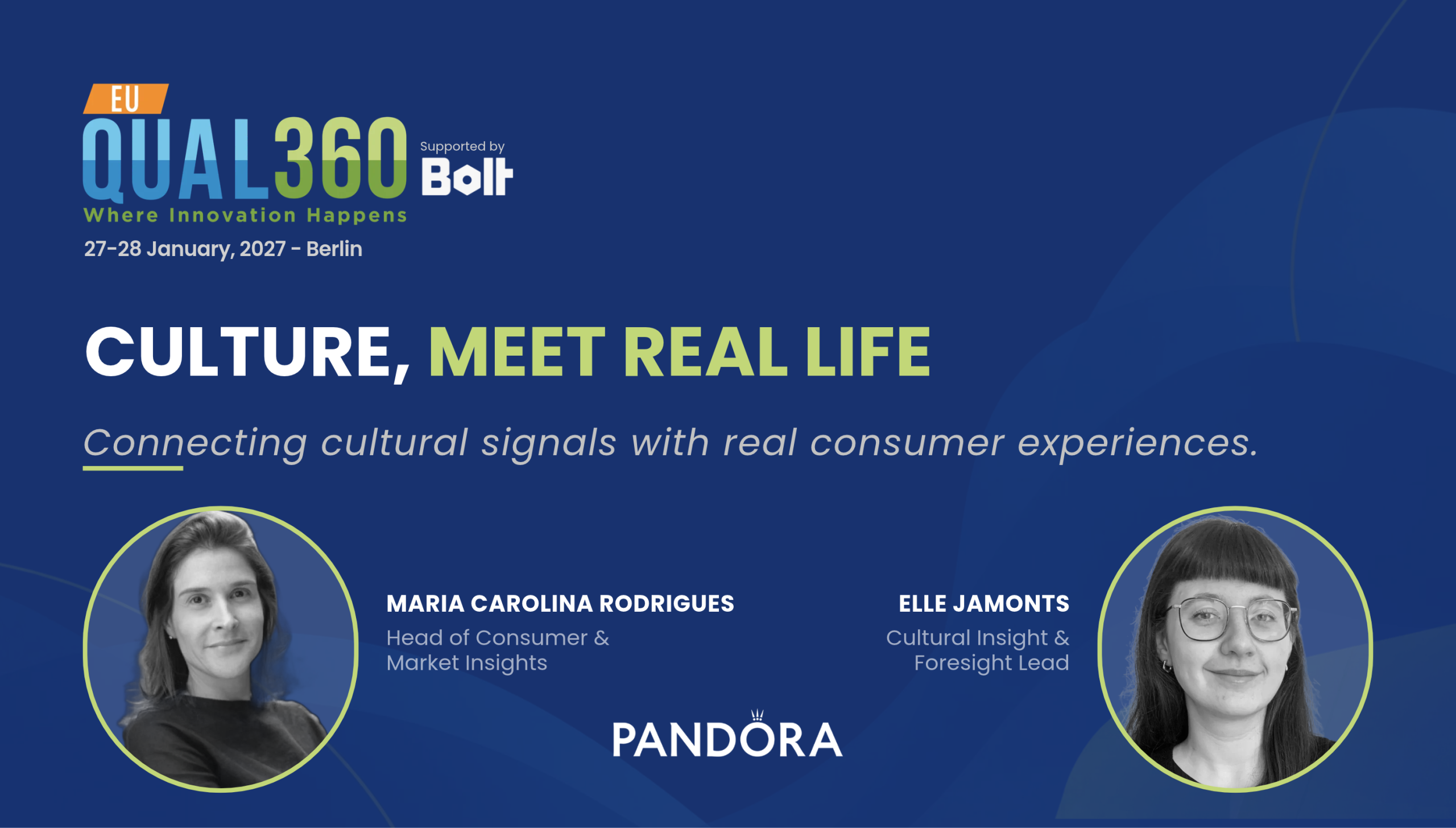
Cultural foresight and qualitative research become more useful when organisations connect emerging cultural signals with the experiences of real consumers. For Pandora, that connection is the starting point for a conversation about research, relevance and the questions businesses ask.
In a joint written interview ahead of QUAL360 Europe 2027, Maria Carolina Rodrigues and Elle Jamonts discuss how cultural foresight works alongside an always-on global consumer community, where AI can help researchers, and why human connection remains central to the discipline.
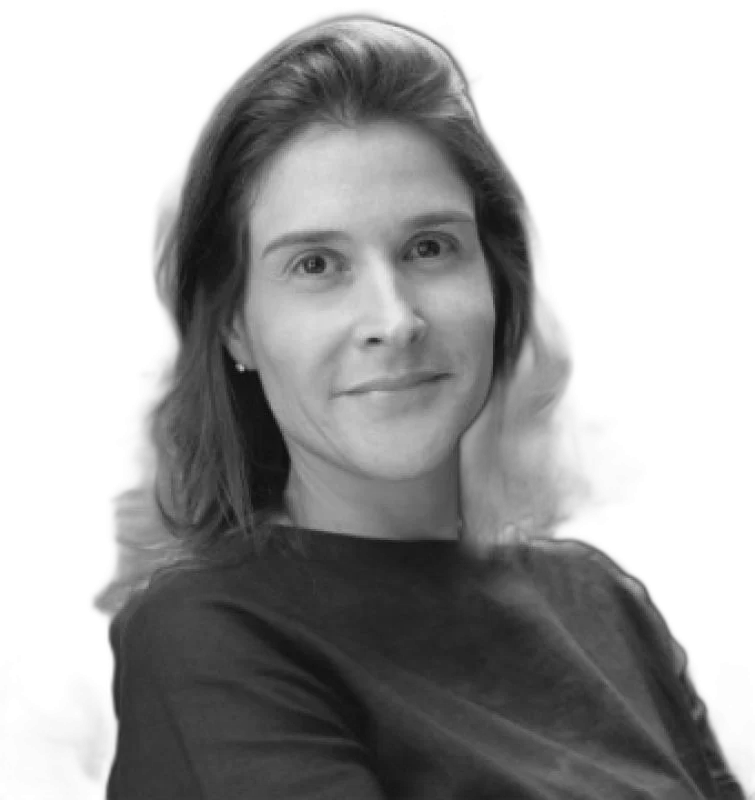
Maria Carolina Rodrigues
Head of Consumer & Market Insights
Pandora

Elle Jamonts
Cultural Insight & Foresight Lead
Pandora
From the joint interview with Maria Carolina Rodrigues and Elle Jamonts:
How cultural foresight and qualitative research work together
Our session explores how cultural foresight and continuous consumer connection can work together to create a deeper understanding of people and culture.
Many organisations are good at identifying emerging signals and trends, while others excel at understanding individual consumer experiences. We believe the real opportunity lies in connecting the two. In the session, we will share how we combine a cultural foresight capability with an always-on global consumer community to move from observing cultural shifts to understanding how they are actually experienced in consumers’ everyday lives.
Using a real example, we will show how a cultural tension identified at a macro level can be explored through ongoing dialogue with consumers across markets, revealing both shared human truths and important local nuances.
I hope delegates leave with the idea that neither foresight nor qualitative research is sufficient on its own. The most powerful insights emerge when we connect the broader forces shaping culture with the lived realities of the people experiencing them.
AI can accelerate analysis, but not replace human judgement
AI is an enabler, not a substitute. It can help us find patterns, summarize information and accelerate analysis, but it cannot replace human curiosity or judgment. If anything, AI is making it clearer that the real value of research lies not in gathering data, but in understanding what matters and why.
What jewellery reveals about memory, identity and personal meaning
One thing I have learned repeatedly is that consumers often reframe the question for us. We might start a conversation about a piece of jewellery, only to discover that what really matters is the memory attached to it, the person who gave it to them, or what it says about who they are. Those tend to be the moments with the greatest impact, because they change not only the answer, but the question itself. This is particularly clear on occasions where we meet the consumer every year, like Mother’s Day or Valentine’s Day. In these spaces we know so well, it’s easy to fall into familiar patterns or assumptions. Letting the consumer lead us to what really matters for them means we can approach these moments with fresh eyes.
From consumer understanding to better decisions
Not all decisions are about certainty, but about confidence. Our role is to help them see the people behind the data, understand the context and recognise when a pattern is meaningful enough to influence a decision. Rather than giving them an answer, we give them the resources to make an informed choice. Research can significantly improve the quality of the decisions we make.
The skills researchers need beyond the next tool
The ability to connect dots. We are surrounded by more information than ever, but information alone does not create understanding. Great researchers will be the ones who can spot patterns, make sense of complexity and tell a story that people can act on.
Connecting consumer voices with meaningful understanding
I think we sometimes focus too much on capturing consumer voices and not enough on making sense of them. Consumers are incredibly generous in sharing their experiences with us, and the adoption of AI only makes it easier to gather immense amounts of data. Our responsibility as researchers is to connect those stories, understand the context and translate them into understanding that helps businesses make better decisions.
What should remain at the heart of qualitative research in 2030?
By 2030, researchers will have access to consumer voices and behavioural data at a scale that would have seemed impossible a few years ago. What I hope remains is the human connection at the heart of qualitative research. Great research starts with genuine curiosity about people, and I don’t see that changing anytime soon.
Beyond the research: what Maria Carolina and Elle are reading and listening to
Outside the discussion of research methods and cultural foresight, both speakers shared their personal recommendations for reading and listening.
Maria Carolina Rodrigues
- A podcast: É Tudo Culpa da Cultura (It’s All Culture’s Fault), by Brazilian anthropologist Michel Alcoforado. I love how he explores the cultural forces shaping our behaviours, beliefs and relationships. A reminder of how much culture influences who we are.
- A book: Any novel by Valérie Perrin. I love her storytelling and the way she turns the complexity of human relationships into something beautiful and unforgettable.
- A song for working, thinking or inspiration: Elderly Woman Behind the Counter in a Small Town by Pearl Jam. (inspired by the storytelling, emotional and engaging!)
Elle Jamonts
- A podcast: The Polyester Podcast by Ione Gamble & Gina Tonic. Culture bites that aren’t too heavy or too fluffy – and perfectly commute-length.
- A book: The Makioka Sisters by Junichiro Tanizaki. It’s a beautiful study of how three very different women respond to a rapidly changing world.
- A song for working, thinking or inspiration: Nothing better for the 3pm slump than Ca7riel & Paco Amoroso’s Tiny Desk concert
Join Pandora at QUAL360 Europe 2027
Maria Carolina Rodrigues and Elle Jamonts are speakers at QUAL360 Europe 2027, taking place on 27–28 January 2027 in Berlin. See their joint session, From Global to Meaningful: Using Culture and Consumer Understanding to Drive Local Relevance, on the official agenda.
Explore registration for QUAL360 Europe 2027.
For more perspectives on cultural foresight and qualitative research across the QUAL360 Europe programme, read Mariana Helguera Martinez on qualitative research in healthcare innovation.