







From research judgement and human context to evidence that changes decisions: reflections shared by the QUAL360 APAC community after two days in Singapore.
AI is changing what research teams can produce. But what helps them understand people, challenge assumptions and influence the decisions that follow?
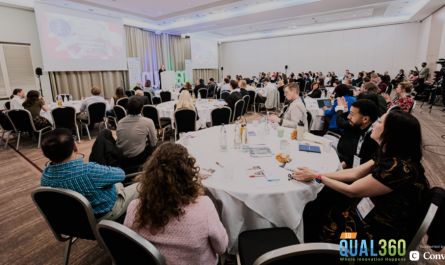
At QUAL360 APAC 2026, held on 3–4 November at Aloft Singapore Novena, these questions came to life through keynotes, workshops, case studies, panels and discussions between participants. The exchange continued after the conference, as speakers, attendees, sponsors and partners shared the ideas they were taking back to their organisations.
The reflections span different perspectives: participants defending the value of in-depth conversation, speakers questioning the limits of self-reported evidence, research leaders asking how findings influence decisions, and partners describing the connections made around the programme.
AI changes the workflow, not the need for judgement
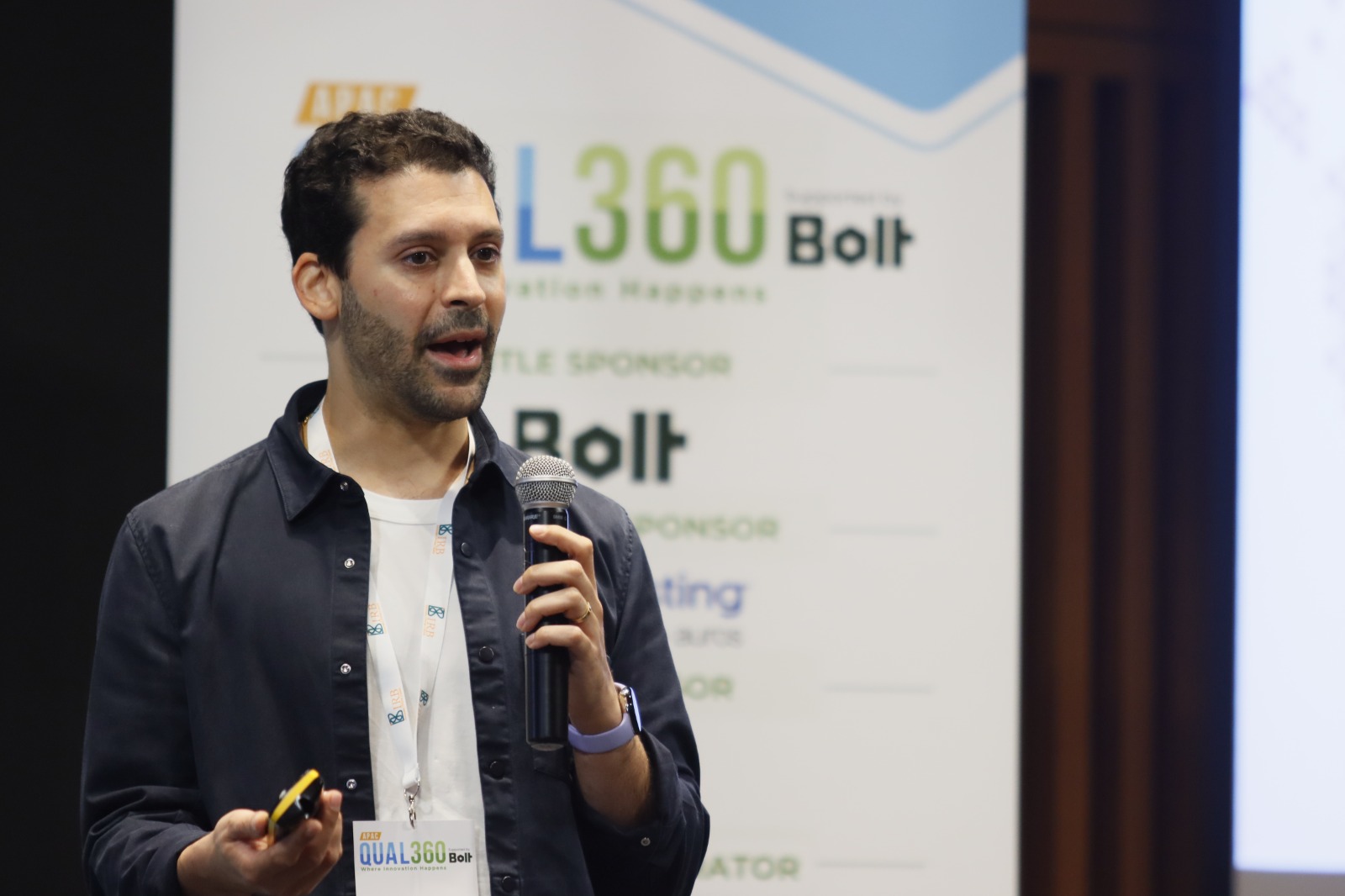
Yashan Cama of Google opened the event with a keynote on research tools, workflows and the pressure to deliver timely insight. In his post-event reflection, he returned to the role of the researcher: methods, context and interpretation still matter when automation makes it easier to process information. Faster synthesis is useful, but it does not decide which questions are worth asking or what the evidence means.
Phong Huynh of Circles, who chaired Day 1, made that distinction particularly memorable. He began proceedings with a poem before returning in his conference reflections to the principle “Synthesis is not insight.” His takeaway was not to reject new tools, but to keep testing assumptions, noticing human signals and beginning with the problem rather than a preferred method.
For Kenneth Law and Ernest Hui of Cathay Pacific, the challenge was also organisational. Their session examined how researchers can work alongside AI-enabled systems. Reflecting on his first public keynote, Kenneth argued that researchers must become trusted partners in decision-making rather than measure their value only by the studies they deliver: “Insights have no value until they influence decisions.”
Attendee Tavis Urquhart offered another perspective in his account of the event, which emphasised the continuing importance of in-depth conversations as more parts of research become automated. The exchange around his post also reflected the personal connections participants were making in Singapore.
Understanding the gap between answers and behaviour
Research quality also depends on recognising when a reported answer does not explain what people actually experience or do. In The Honesty Gap: Explaining a 100-Year Silence, Marcus Lim of title sponsor Bolt Insight and Vijay Raj used a football-related study to explore the distance between expressed attitudes and behaviour. The session highlighted why contradictions can be a starting point for better enquiry, not simply noise to remove from a dataset. Merlien also examined the research behind this case in a separate article.
Esther Tan of Plaza Premium Group approached a similar question from airport hospitality. In her Heartware reflection, she asked, “If AI knows me, does it understand me?” Search and booking data can reveal patterns, but understanding the person behind a journey still requires interpretation. A later discussion with Bill Huang moved the idea further: qualitative research should return to people and observed behaviour as part of a continuous learning process.
Attendee Rinku Shah connected the issue to consumer segmentation in her own post. Demographic similarities, she observed, cannot tell researchers who someone trusts, what barriers they face or which information they consider credible. AI can identify patterns, but cultural context and responsibility for the decision still require human judgement.
From human-centred to life-centred research
The workshop Inclusive Research in Asia: Designing for People, Planet, and Prosperity, led by Snehal Pawar of Alstom and Shruti Umesh Chakke of Regenerative Nomads, widened the discussion beyond conventional consumer research. Participants considered how place, local knowledge, relationships and ecosystems shape the way communities learn and make sense of the world.
In its 10 November reflection, Regenerative Nomads returned to the workshop’s experience of Changthang, Ladakh. The team described how the learner and the land can become the curriculum, with lived experience and ecological knowledge informing the research process. It is a distinctive example of what changes when researchers make room for knowledge systems beyond their usual frameworks.
The same importance of context emerged in presentations on underserved populations and immersion research, including work shared by Katherine Mendoza of Haleon and Marie Kristel Gabawa of Bank of the Philippine Islands. Dawn Herdman, Founder and CEO of Illuminate Asia, later highlighted empathy immersions and co-creation as ways of preserving the human observations that can challenge a business’s assumptions. For more on these approaches, read Merlien’s interview on life-centred research and local knowledge.
Getting research into decisions
Producing evidence is only one part of the researcher’s job. For many participants, the harder challenge was ensuring that findings are heard, interpreted and used by the people making decisions.
“An insight can be understood, agreed with, and still go nowhere.”
— Dawn Herdman, Illuminate Asia
Mark Jefferson Go of PT. Erajaya Swasembada gave a practical example in his post about Erafone’s retail research. Combining observation of the shopping journey with feedback from store staff helped expose an important difference between the person who completes a purchase and the people who influence it. That changes which moments a retailer needs to investigate.
Diyana Syafiqah of Bosch Home Comfort Group brought the qualitative lens inside organisations. In her post-event reflection, she argued that understanding colleagues’ motivations, professional languages and disagreements can be as important as understanding customers. Strong findings need the right conditions and shared understanding to become useful across teams.
Dario La Micela of Pandora described a related challenge in his recap of customer intelligence systems: feedback is abundant, but connecting it to decisions requires ownership, operational follow-through and adoption. AI can accelerate parts of the process; people remain responsible for its consequences. Merlien explored that approach further in its interview on continuous consumer intelligence.
Protecting the discipline while methods evolve
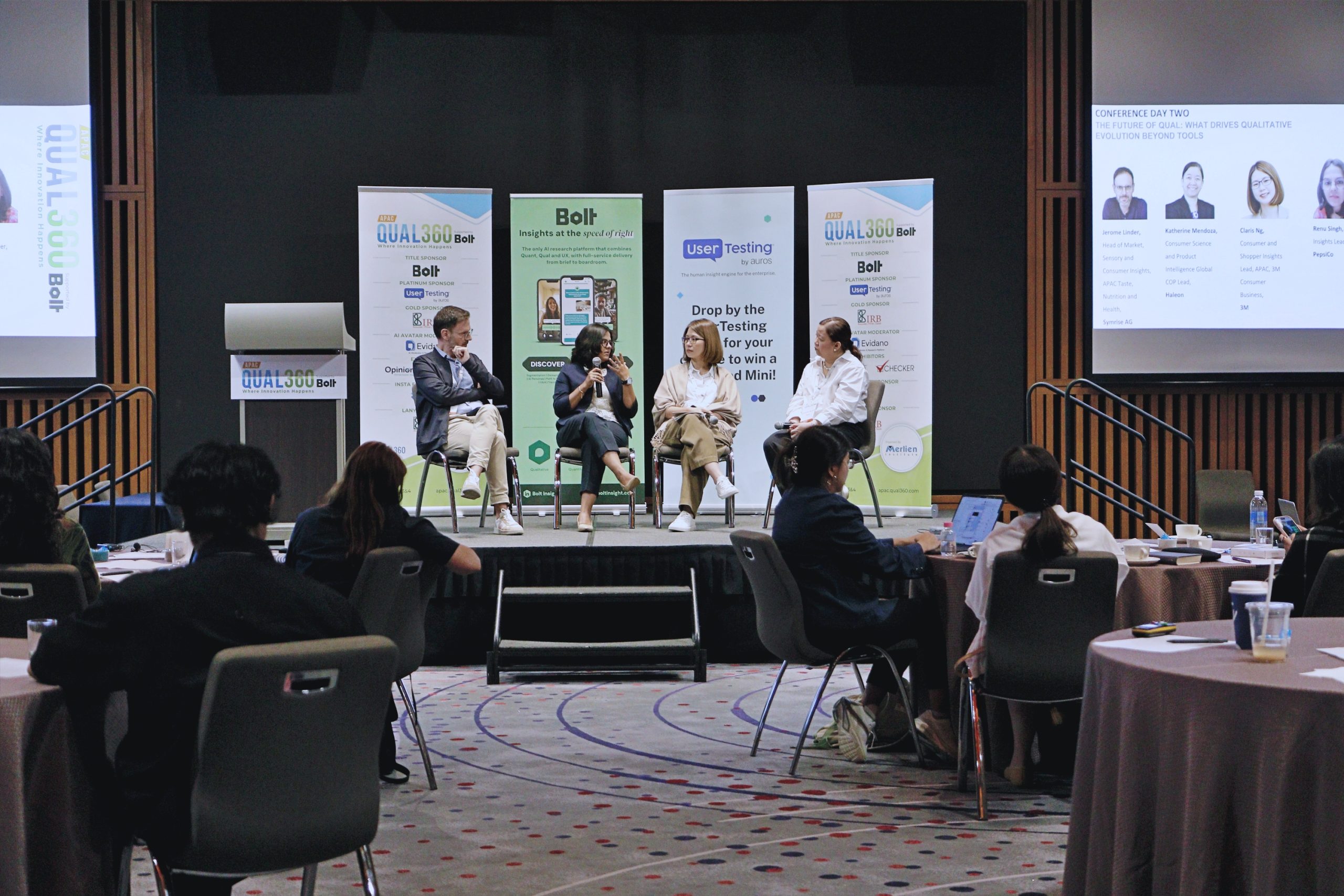
The Day 2 panel The Future of Qual: What Drives Qualitative Evolution Beyond Tools brought these questions together. Moderated by Jerome Linder of Symrise, it featured Katherine Mendoza (Haleon), Claris Ng (3M) and Renu Singh (PepsiCo). The discussion considered how to protect empathy and research rigour, support decisions across functions and develop skills for AI-enabled work.
In her wider industry reflection, Claris offered a concise distinction: “Protect the discipline, not the process.” Established workflows can change without giving up the critical thinking and attention to human nuance on which qualitative research depends.
Ribka Martina Simanjuntak of Bayer addressed the leadership side of this challenge. Her post-conference reflection explored evidence-based decisions and bringing teams along when the path forward is uncertain. The conference’s change-management discussions similarly examined the trade-offs between speed, resources, accountability and quality.
The conversations beyond the stage
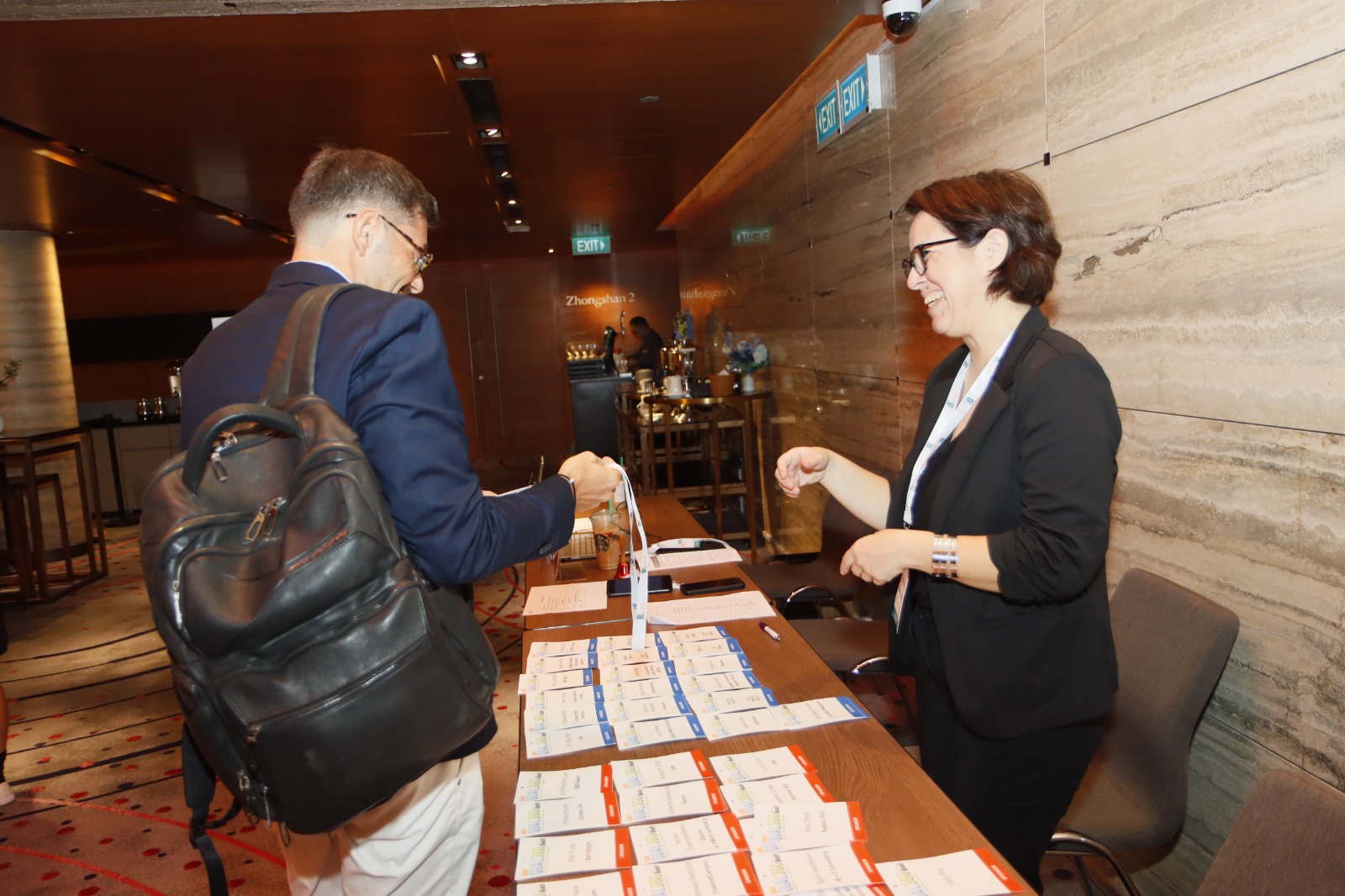
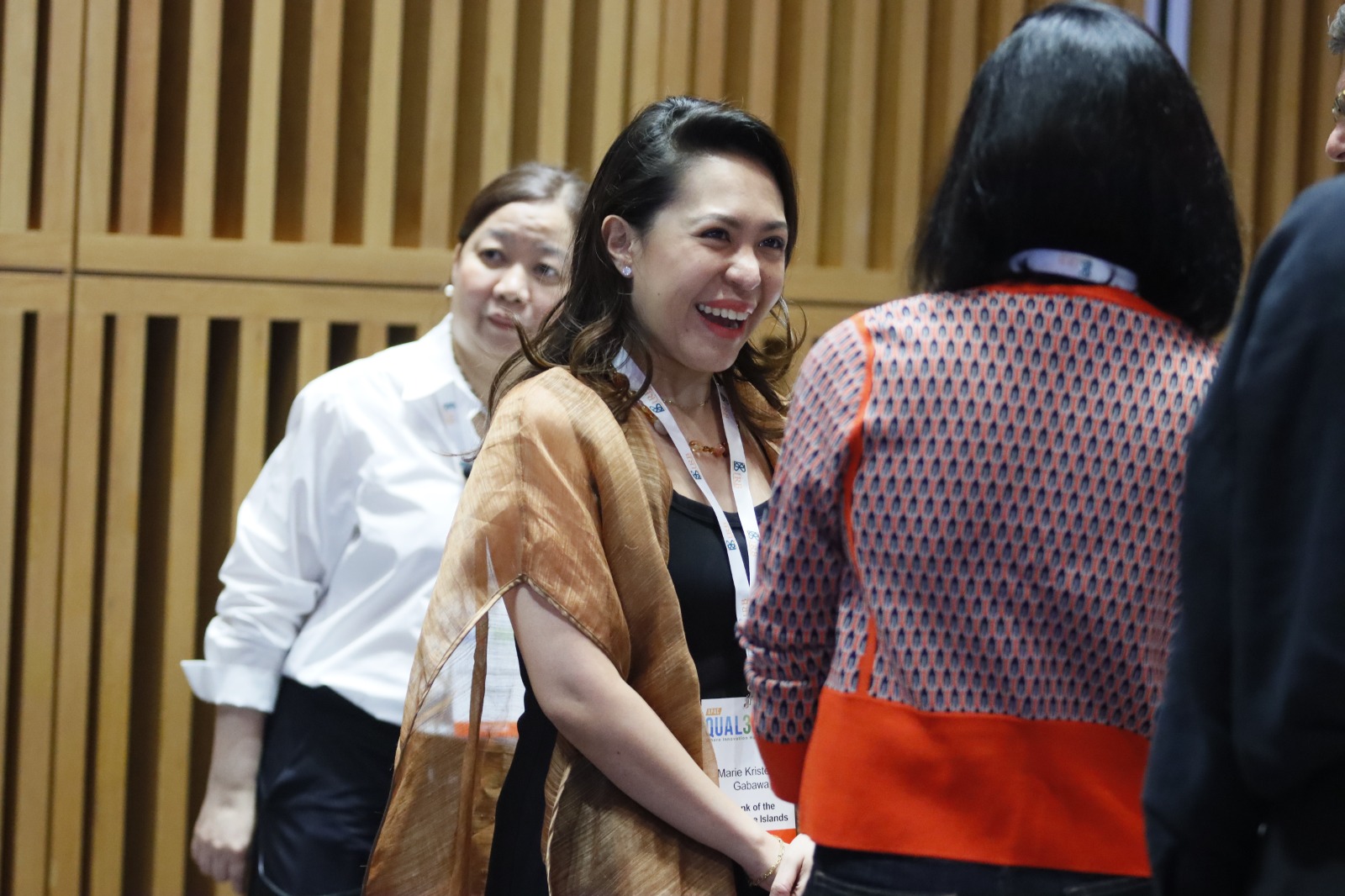
The event’s value extended into the discussions between sessions and the connections that continued afterwards. In her personal reflection, Marie Kristel Gabawa described unhurried exchanges, new friendships and the feeling of becoming part of a research community. Craig Griffin, attending with TMRS Thailand, also praised the programme and the opportunity to connect with regional peers.
Partners noticed those exchanges too. Claudia Siregar highlighted the range of presentations, workshops and roundtables and thanked the Merlien team, with acknowledgement of media partner Asia Research Media. Her post captured something that was visible across the event: discussions often continued long after the formal session ended.
Checker Software Systems, an exhibitor at its first QUAL360 event, shared an especially warm reaction as its team travelled home: “That was our first time at Qual360, and we can’t wait to go back.” The company also reflected on conversations with market research and customer experience professionals about turning open-ended feedback into actionable understanding.
The event was supported by Bolt Insight (Title Sponsor), UserTesting (Platinum Sponsor), IRB (Gold and Lanyard Sponsor) and Meltwater (Elite Sponsor). Opinions and Checker Software Systems joined as exhibitors, while Evidano supported the AI avatar moderator and Global Matrix Survey the Instagram frame. Association and media partners included TMRS, MRSS, PERPI, the Marketing Research Society of Malaysia and Asia Research Media.
Relive Singapore and continue the conversation in Europe
From the panel discussions to the moments between sessions, the official QUAL360 APAC 2026 photo gallery brings together highlights from both days in Singapore.
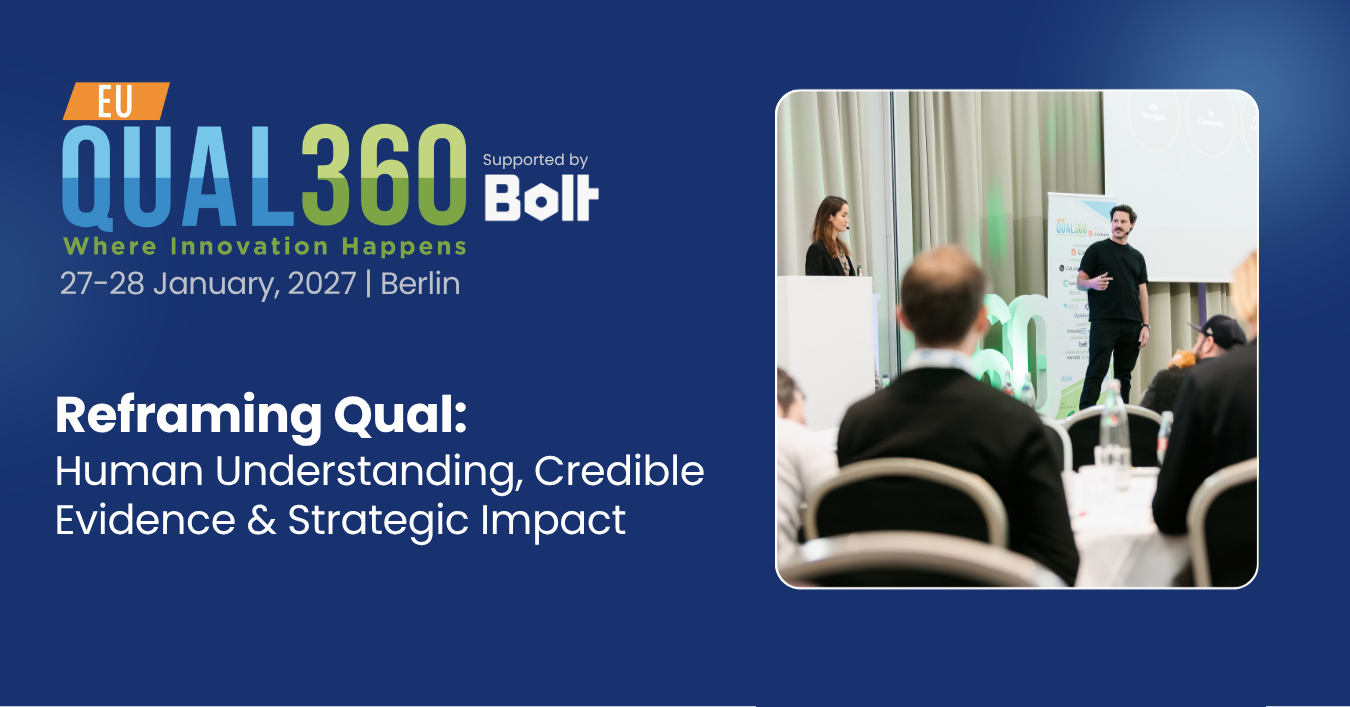
The conversation continues at QUAL360 Europe 2027, on 27–28 January in Berlin. Its programme focuses on human understanding, credible evidence and the strategic impact of qualitative research.
For researchers based in North America, QUAL360 North America 2027 takes place on 17–18 March in Washington, D.C.
Thank you to the speakers, attendees, sponsors and partners who brought their experiences and questions to Singapore—and continued the exchange afterwards.